The Mourner's Kaddish
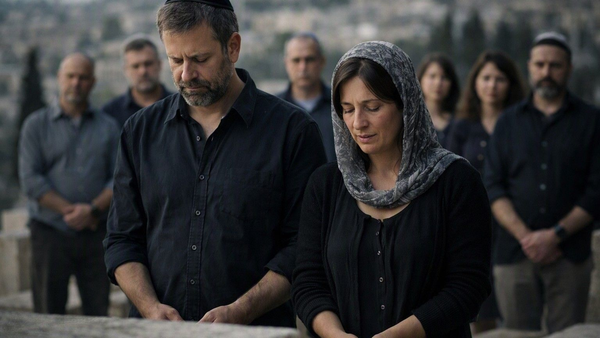
The mourner's prayer, in Aramaic, said with a minyan. It magnifies God rather than death.
The mourner's prayer, in Aramaic, said with a minyan. It magnifies God rather than death.
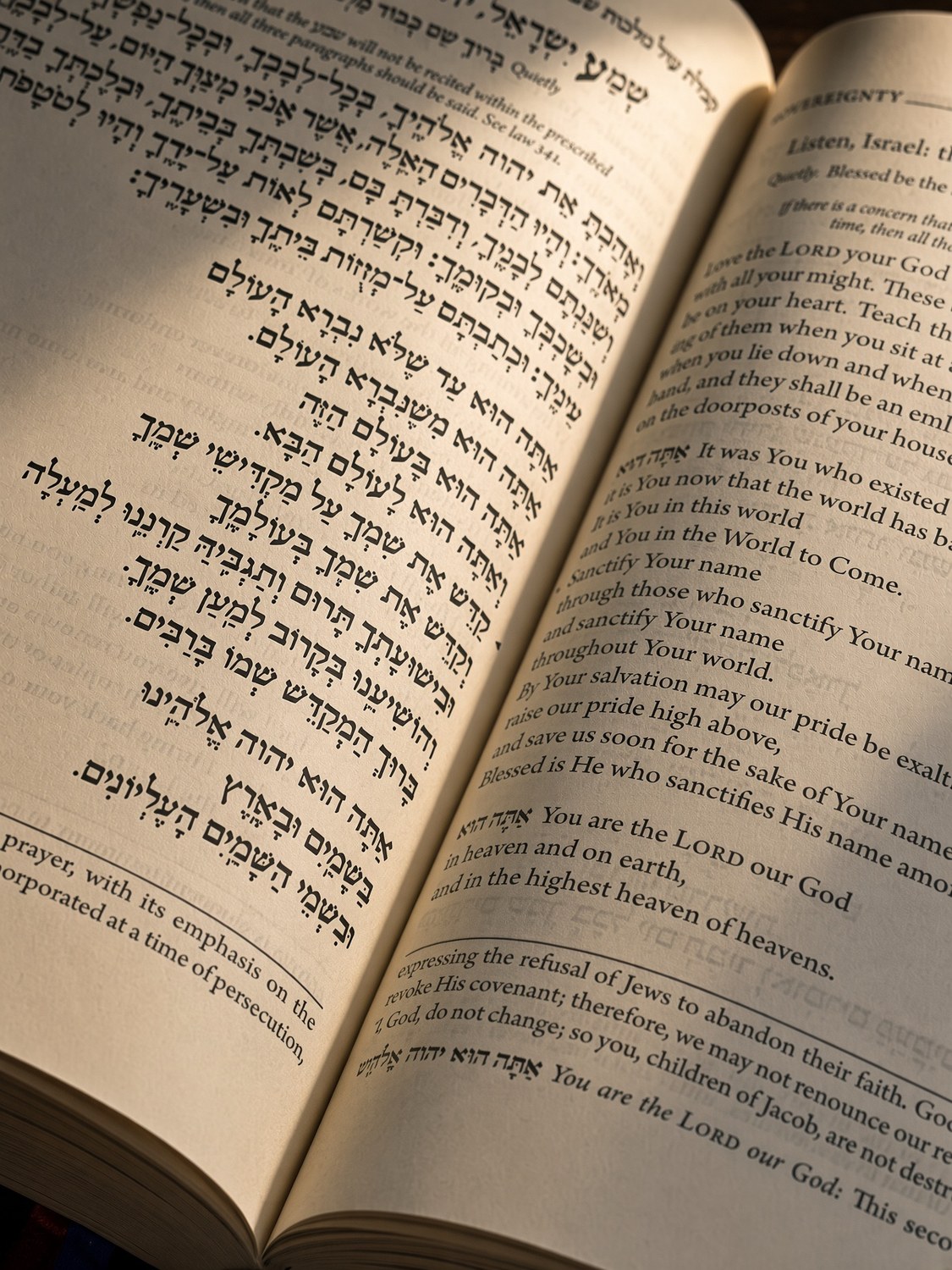
Page-by-page transliteration and audio read-along.

Jewish identity has both a Halachic definition and a wider self-understanding. The two do not always coincide.
The Halachic rule of matrilineal descent is sourced in Devarim 7:3–4 and elaborated in Talmud Kiddushin 68b, where the Sages derive from the verse that a child’s status follows the mother. The Mishneh Torah (Hilchot Issurei Biah 15:3) and the Shulchan Aruch (Even Ha’Ezer 4:19) codify this as binding.
Conversion (giyur) is the second route. A valid Orthodox conversion requires acceptance of the mitzvot (kabbalat ol mitzvot), circumcision (for men), and immersion in a mikveh (ritual bath), all under the supervision of a beit din (rabbinical court) of three observant Jews. Conservative conversions are conducted on similar lines with some halachic variation; Reform conversions typically omit the requirement of immersion and circumcision in some communities.
Continue reading →Learn letters, vowels, and words, first by demonstration, then with interactive flashcards.

Three classical answers — the rationalist, the kabbalist, and the Hasidic — and why each is illuminating.
The Jewish discipline of character refinement — old as the Talmud, formalized in the 19th century by Rabbi Yisrael Salanter.
The great 18th-century split that still shapes the contemporary Orthodox world.
These ten sections have been designed first as a structured guide for learning, and second as an almanac for free exploration.